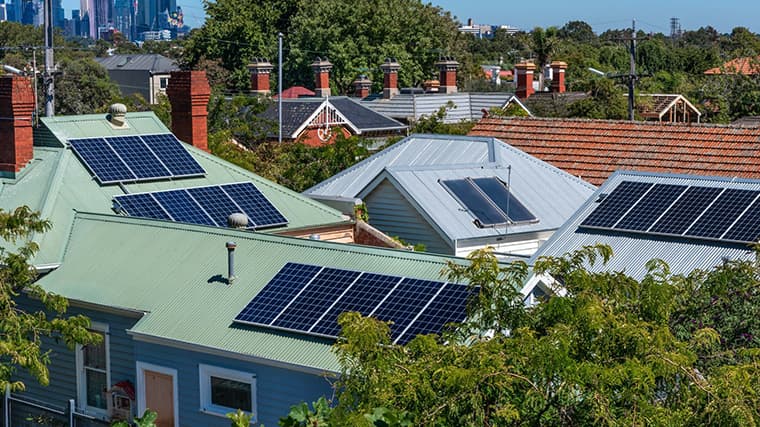
Maintaining your rooftop solar
Now you have rooftop solar, we want you to get the most out of it. Learn how to maintain your solar system and troubleshoot export issues.
Basic maintenance
These simple steps help your solar system to work safely, reliably and efficiently:
- keep panels clean
- prune trees that cast shadows over panels
- follow the maintenance schedule that your installer provided.
Check your solar exports
myEnergy shows your solar exports and consumption from the network.
You can:
- View up to two years’ data on the usage trends in your home
- Find ways to be more energy efficient
- Save money by comparing offers from energy retailers.
Maintain your solar connection
Some rooftop solar systems are connected to the internet. This allows us to communicate with the inverter to manage exports and generation.
We will notify customers if their exports are impacted by testing or a loss of connectivity.
Planned testing
We regularly test that rooftop solar systems can respond to our signals.
Customers will be informed two weeks before the planned test. This will advise:
- The week the test will be conducted.
- The time window when the test will be conducted (typically between 10am-2pm).
Power supplies won't be interrupted during planned testing.
Loss of connectivity
Solar exports will stop if an internet-connected system is disconnected from our systems.
We will send a message if connectivity isn't restored within seven days. It will provide advice to check and reestablish the connection.
We will send a second message after a further seven days if the connection is not restored.
See our 'solving grid export problems' section below for troubleshooting advice.
We will confirm when the connection is restored.
Solve grid export problems
There can be several reasons why a solar system stops exporting power to the network. Causes and solutions very based on when your solar system was installed.
A licensed electrician can be found on the Energy Safe Victoria website.
Common problems
Some solar systems may have several switches. For example, your system may include:
- a solar main supply switch in your switchboard
- an ‘AC isolator’ switch near your inverter
- a ‘DC isolator/solar array’ switch on your inverter.
Some newer systems may not have all these switches. If you have had electrical work done recently, check that your solar system has been switched back on.
What to do: Check all switches. Contact your installer or a licensed electrician if you think the issue may involve more than a simple switch
Follow the steps below if notified that your internet-connected solar system is offline:
- Step 1. Restart your router
- Step 2. If step 1 doesn't restore your internet connection, contact your internet service provider (ISP)
- Step 3. If your internet is active, contact your solar installer to confirm your inverter manufacturer’s platform is working
If your system appears to be switched on, lack of export could be caused by faulty equipment. This could include a defective inverter or faulty internal connections.
What to do: if you suspect equipment failure, contact your installer or a licensed electrician.
You may be using more electricity during the day than your solar system is generating. Smaller solar systems are more likely to be affected by changes in electricity use. If you have started using an air conditioner, pool pump or other energy hungry appliances, your usage may exceed solar generation.
What to do: check if your energy consumption patterns have changed.
Your export limit will be activated once your installer finishes your solar alteration application request. Our New Energy Services Team will validate the application and your system will be active.
A new solar system will only generate enough energy to meet the consumption needs of the premises during the testing process. Generation and exports will increase when we validate the alteration application request.
More articles
Understanding your electricity needs
As homes and business electrify, many customers are using more electricity than their property was originally designed to handle.

Vulnerable customer assistance program
The Vulnerable Customer Assistance Program is designed to reduce energy-related hardship by helping eligible customers overcome barriers to electrification.